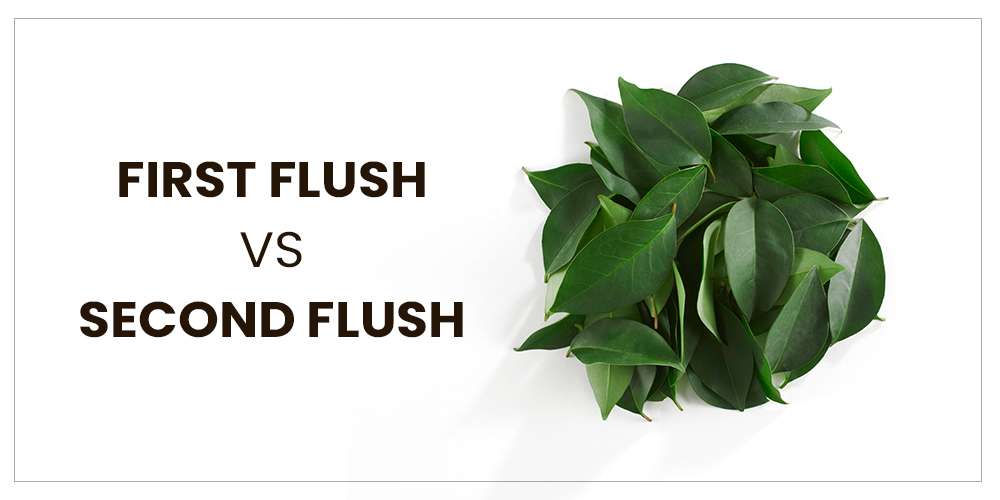
Darjeeling tea is often referred to as the “Champagne of Teas” because of its exceptional quality, distinctive character, and limited production. Among the various harvests throughout the year, First Flush and Second Flush are the most celebrated and sought after by tea enthusiasts worldwide.
But what exactly sets these two flushes apart? In this guide, we’ll explore the differences in harvest time, appearance, flavour, aroma, and brewing characteristics to help you choose the perfect Darjeeling tea for your palate.
But what exactly sets these two flushes apart? In this guide, we’ll explore the differences in harvest time, appearance, flavour, aroma, and brewing characteristics to help you choose the perfect Darjeeling tea for your palate.
What is First Flush Darjeeling Tea?
First Flush Darjeeling tea is the first harvest of the year, typically plucked between late February and mid-April, just after the tea bushes awaken from their winter dormancy.
The young leaves are tender and rich in fresh aromatic compounds, resulting in a tea that is prized for its delicate elegance.
The young leaves are tender and rich in fresh aromatic compounds, resulting in a tea that is prized for its delicate elegance.
Characteristics of First Flush
- Light golden liquor
- Fresh floral aroma
- Delicate sweetness
- Notes of spring flowers, green almonds, fresh herbs, and citrus
- Bright, lively finish Light body with gentle briskness
What is Second Flush Darjeeling Tea?
Second Flush Darjeeling tea is harvested between mid-May and June, after the tea bushes have had several weeks of active growth.
This harvest produces fuller-bodied teas with deeper complexity and the famous Muscatel character that has made Darjeeling tea legendary.
Characteristics of Second Flush
This harvest produces fuller-bodied teas with deeper complexity and the famous Muscatel character that has made Darjeeling tea legendary.
Characteristics of Second Flush
- Rich amber liquor
- Fuller body
- Smooth mouthfeel
- Fruity sweetness
- Distinctive Muscatel notes reminiscent of ripe muscat grapes
- Hints of honey, dried fruits, caramel, and warm spices
Understanding the Famous Muscatel Flavour
One of the defining characteristics of premium Second Flush Darjeeling tea is its celebrated Muscatel flavour.
Despite the name, no grapes are added to the tea. The term describes the naturally occurring fruity aroma and flavour that resembles ripe Muscat grapes. This remarkable character develops under a unique combination of Darjeeling’s high-altitude climate, specific tea cultivars, careful manufacturing, and seasonal growing conditions.
Only a small proportion of Second Flush teas develop an outstanding Muscatel profile, making these teas especially prized by collectors and connoisseurs.
Only a small proportion of Second Flush teas develop an outstanding Muscatel profile, making these teas especially prized by collectors and connoisseurs.
Which One Should You Choose?
Choose First Flush if you enjoy:
- Delicate floral teas
- Fresh spring aromas
- Light-bodied brews
- Elegant afternoon tea
- Richer, fuller flavours
- Fruity complexity
- Honeyed sweetness
- The classic Muscatel experience
Brewing Recommendations
First Flush
Experience the Finest Darjeeling Teas
At Tea Emporium, we carefully source exceptional single-estate Darjeeling teas directly from renowned gardens. Every tea is hand-selected after extensive tasting to ensure remarkable quality, freshness, and authenticity. Whether you’re captivated by the floral elegance of a premium First Flush or the rich Muscatel complexity of an outstanding Second Flush, our curated collection offers some of the finest Darjeeling teas available.
- Water temperature: 80–85°C
- Tea leaves: 2–2.5 grams per 120 ml
- Steeping time: 3–4 minutes
- Water temperature: 90–95°C
- Tea leaves: 2.5–3 grams per 120ml
- Steeping time: 4–5 minutes
Experience the Finest Darjeeling Teas
At Tea Emporium, we carefully source exceptional single-estate Darjeeling teas directly from renowned gardens. Every tea is hand-selected after extensive tasting to ensure remarkable quality, freshness, and authenticity. Whether you’re captivated by the floral elegance of a premium First Flush or the rich Muscatel complexity of an outstanding Second Flush, our curated collection offers some of the finest Darjeeling teas available.