
Darjeeling Tea Gardens
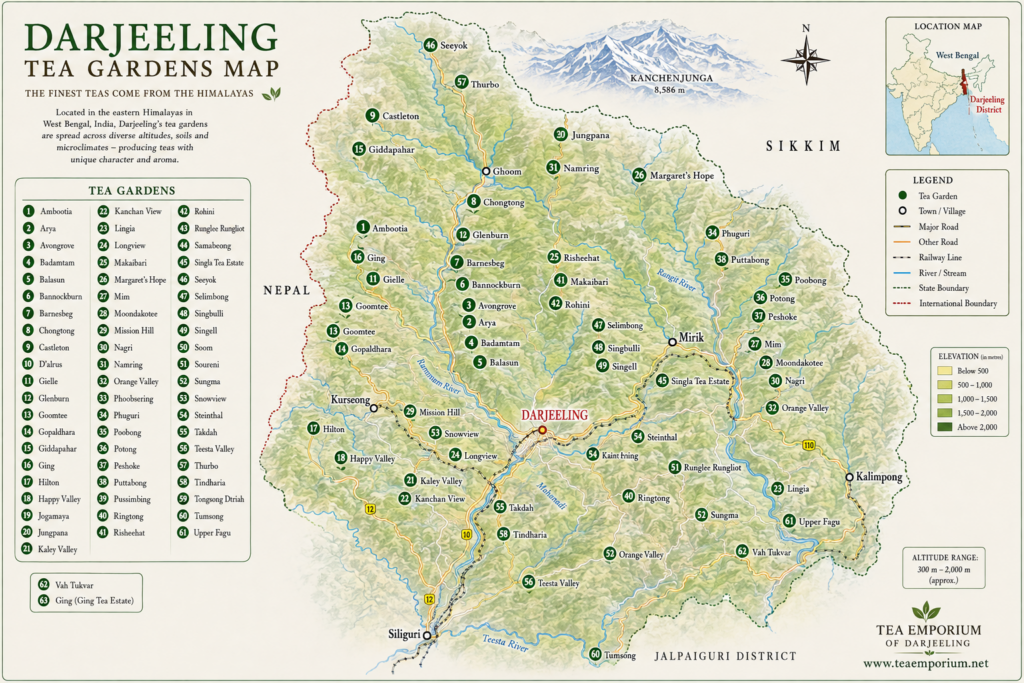
Located in Kurseong North, Darjeeling, Ambootia lies at approximately 950–1,450 metres (3,100–4,760 ft). The estate is associated with the Ambootia Group, led by the Bansal family, and is renowned for organic and biodynamic tea production and specialty orthodox teas.
Located in the Rungbong Valley of Darjeeling East, Arya stretches from approximately 900–1,820 metres (2,950–5,970 ft). The estate is operated by Arya Tea Company Ltd. / KPL International, and is famous for specialty teas such as Diamond, Ruby, Emerald and Pearl.
Avongrove Tea Estate is located in the Darjeeling region and is known for producing high-quality orthodox teas. The estate is situated at an altitude ranging from approximately 300 to 1,200 metres above sea level, offering ideal growing conditions for flavour-rich tea leaves.
Spanning an area of around 250 hectares, Avongrove Tea Estate benefits from a unique terroir, cool climate, and well-drained slopes, all of which contribute to its distinctive aroma and smooth character in every cup.It is also known world wide for it’s excellent black,green,oolong and white darjeeling teas
Located in Darjeeling West near the Rangeet Valley, Badamtam occupies a broad Himalayan elevation zone. It is currently operated by Goodricke Group Ltd., one of India’s major tea companies, and is known for aromatic orthodox Darjeeling teas. Current supply-chain records place the estate around 608 metres at the mapped factory/estate point, while other sources report a much wider estate elevation range. It is especially famous worldwide for its 1st and 2nd flush darjeeling teas made from its young cultivars like AV2 and P312 to name few.
Balasun is located near Sonada in Kurseong, with an altitude ranging from approximately 365–1,375 metres (1,200–4,510 ft). The estate is operated by Jay Shree Tea & Industries Ltd. and is known for full-bodied teas and distinctive muscatel character.
Bannockburn is situated in Darjeeling West near Lebong, at approximately 1,200–2,000 metres. It produces orthodox Darjeeling teas, particularly aromatic First Flush teas.The world famous cultivar BB157 was originally developed in this garden
Barnesbeg is located in the high-altitude western Darjeeling hills, around 1,400–2,100 metres depending on the section measured. This estate produces high-altitude orthodox black tea.
Chongtong, also known as Sirisi, is located in Darjeeling East, towards the Teesta-facing hills. The garden lies broadly around 1,200–1,800 metres and is associated with private estate management, producing aromatic orthodox Darjeeling teas.
Castleton is located in Kurseong South, around Punkhabari and Kurseong. Its tea sections range approximately from 915–1,830 metres, although some current sources report higher estate points. Castleton is operated by Goodricke Group Ltd. and is world-renowned for exceptional Second Flush muscatel Darjeeling tea.They also make some excellent Moonlight teas made the AV2 clonal bushes planted at the highest elevation slope of the garden.Tea lovers around the world appreciate it’s quality.
Dilaram is the name listed by Tea Board rather than “D’alrus.” It is located in the Kurseong region of Darjeeling, at a mid-to-high Himalayan elevation, and is operated as a Darjeeling orthodox tea estate.
Gielle is located in the eastern Darjeeling hills around the Takdah region, generally at approximately 1,200–1,800 metres. The estate produces orthodox Darjeeling tea and benefits from the cool, misty Himalayan climate.
Glenburn is located in the Darjeeling East region above the Teesta/Rangeet landscape, at approximately 1,000–1,800 metres. It is a family-managed estate, internationally known for premium orthodox Darjeeling teas, tea tourism and elegant First and Second Flush teas.
Goomtee is located in South Kurseong’s Muscatel Valley, with tea sections approximately 900–1,800 metres and an average elevation around 4,000 ft. It is privately managed by the Kejriwal and Prasad families and is known for aromatic orthodox teas.
Gopaldhara is situated in the Mirik Valley, at approximately 1,700–2,130 metres (5,500–7,000 ft). The estate covers about 320 hectares, with around 172 hectares under tea, and is operated by the Saria family. It is famous for high-altitude specialty teas and innovative First and Second Flush production.
Giddapahar, meaning “Eagle’s Cliff,” is located near Kurseong, at approximately 1,400–1,500 metres. The garden is privately managed and is known for distinctive orthodox teas, including specialty green teas.
Ging is located in the western Darjeeling hills, at approximately 1,500–2,100 metres. The estate produces orthodox Darjeeling teas and benefits from the cool mountain climate and high-elevation terroir.
The Tea Board identifies this garden as Ambiok (Hilton). It is located in the Darjeeling tea-growing region and produces orthodox Darjeeling tea. The garden is operated under the Ambiok/Hilton estate management.
Happy Valley is located only about 3 km from Darjeeling town, in the western hills. Its tea garden occupies a high-altitude Himalayan setting, commonly reported around 1,800–2,100 metres. It is under private management, historically associated with the Bansal family, and is one of Darjeeling’s best-known heritage tea estates.
Jogamaya is located in the Kurseong South region of Darjeeling, at approximately 1,000–1,600 metres. It is a Darjeeling orthodox tea estate producing seasonal teas from the Himalayan slopes.
Jungpana is a small, prestigious estate in South Kurseong, generally around 1,000–1,500 metres. Covering approximately 32 hectares, it is privately managed and famous among connoisseurs for intensely aromatic First Flush and highly prized Second Flush muscatel teas.
Kaley Valley, also written Kalej Valley, is located in the eastern Darjeeling hills, around the Darjeeling–Teesta growing belt. Its elevation is approximately 1,200–1,800 metres, and it produces orthodox Darjeeling tea.
Kanchan View is located in the eastern Darjeeling hills, in the area formerly associated with Rungeet. The garden lies at approximately 1,200–1,800 metres and produces orthodox Darjeeling teas from the region’s distinctive Himalayan terroir.
Lingia is situated approximately 30 km west of Darjeeling town, with an elevation of about 900–1,800 metres. The estate covers around 220 hectares, including approximately 141 hectares under tea, and is operated by the Chamong Group.
Longview is located around Pankhabari in the Kurseong region and stretches across the lower Himalayan slopes. Its tea-growing areas generally lie around 600–1,200 metres. The estate mostly grows and produces darjeeling orthodox teas.
Makaibari is located near Kurseong in Kurseong South, with tea-growing areas around 600–1,500 metres. The wider estate covers approximately 750 hectares, including extensive forest, with around 270 hectares under tea. Current management is associated with the Luxmi Group, while the estate retains its historic Banerjee family legacy.
Located in Kurseong North at elevations of approximately 950–1,830 metres, Margaret’s Hope Tea Estate covers around 585 hectares and is operated by Goodricke Group Ltd. The estate is renowned for premium First Flush and intensely aromatic Second Flush Muscatel Darjeeling teas. Its highly sought-after Moonlight teas and tippy clonal teas are made from AV2 clonal cultivars and are especially appreciated by Darjeeling tea lovers worldwide.
Mim is located in Darjeeling East, generally around 1,400–2,000 metres. The estate is associated with Andrew Yule & Company Ltd. and produces orthodox Darjeeling tea with a distinctive eastern-slope character.
Moondakotee is located in Kurseong North, in the western Darjeeling hills, at approximately 1,200–1,800 metres. It is a recognized Darjeeling tea garden producing orthodox teas from the Himalayan slopes.
Mission Hill is located in the Darjeeling tea-growing region, in the Kurseong/Darjeeling hills, at approximately 1,200–1,800 metres. Public government records identify the operator as Asha Tea Co. Pvt. Ltd.
Nagri is located in the Kurseong region of Darjeeling, generally around 1,000–1,600 metres. It is one of the historic Darjeeling gardens and produces orthodox teas reflecting the area’s mountain terroir.
Namring Darjeeling Tea is renowned for its elegant First Flush, aromatic Second Flush and exceptional speciality teas. Located in Darjeeling East, Namring Tea Estate spans about 450 hectares, with its highest plantations reaching around 1,700 metres (5,500 ft) above sea level. Its high-altitude Himalayan terroir produces outstanding black, green, oolong and white teas. The estate’s prized AV2 clonal bushes in the Jinglam Division produce some of the finest and most sought-after Darjeeling teas, celebrated for their distinctive aroma, flavour and character.
Orange Valley, also known as Bloomfield, is located in Darjeeling East and is associated with the Mim growing area. Its tea sections are approximately 1,400–2,000 metres, and the garden produces orthodox Darjeeling teas with floral and fruity character.This garden most has china ,clonal and china-hybrid cultivars in it’s garden.
Phoobsering is located in the western Darjeeling hills, around the Darjeeling town area, at approximately 1,500–2,100 metres. It is a historic Darjeeling garden known for aromatic orthodox teas and is particularly significant for Darjeeling clonal cultivars.The famous P312 ( phoobshering 312) clone was conceived from this garden and is known world wide for its exotic aroma.
Phuguri is located in the Mirik Valley, at approximately 1,200–1,800 metres. Tea Board lists Phuguri among the recognized Darjeeling gardens. They are famous for making some of the finest black ,oolong and white darjeeling teas every season from their healthy young clonal bushes from cultivars like AV2 ,P312,BB157 and T78 to name a few.
Poobong is located in the western Darjeeling hills, generally around 1,200–1,800 metres. It produces orthodox Darjeeling tea and is included in Tea Board’s current list of recognized gardens.
Potong is located in the western/highland Darjeeling tea belt, at approximately 1,400–2,000 metres. It produces orthodox Darjeeling tea and benefits from the cool Himalayan climate.
Peshoke, also spelled Pashok/Peshok, is located in the eastern Darjeeling hills near the Teesta Valley, at approximately 1,000–1,500 metres. It produces orthodox Darjeeling teas influenced by the warmer eastern Himalayan terroir.
Puttabong, historically known as Tukvar, is one of Darjeeling’s oldest and most important tea estates. It is located in the Darjeeling Sadar/Pulbazar region and extends from approximately 600 metres to more than 2,000 metres. It is operated by Jay Shree Tea & Industries Ltd. and is particularly renowned for exceptional First Flush teas. They have been producing some of the finest speciality darjeeling teas every harvest season made from young clonal cultivars like AV2,P312, RR and T78 which grows very well in this tea garden.They are worldwide famous for their seasonal black and green teas.
Pussimbing, also known as Minzoo, is located in Darjeeling East, at approximately 1,200–2,000 metres. It produces aromatic orthodox teas and is recognized by Tea Board under the Pussimbing (Minzoo) name.
Ringtong is located in Kurseong North, at approximately 1,000–1,600 metres. It is a historic Darjeeling garden producing orthodox teas with the characteristic aroma and briskness of the Kurseong hills.Recently they are producing of the finest black teas and green teas made from their aged and matured china bushes.
Risheehat is located in Darjeeling East, with tea-growing sections around 1,200–1,800 metres. It is operated by Jay Shree Tea & Industries Ltd. and is known for aromatic orthodox teas and distinctive eastern Darjeeling character. They have some of the best china cultivars in their garden along with the other cultivar types. They produce some of the finest speciality darjeeling teas from cultivars like AV2,P312 & BB157 which grows at the LIZA HILL section of this tea garden.
Rohini is located in southern Kurseong, in the lower Darjeeling foothills. Public sources report differing altitude measurements for the estate; approximately 300–1,500 metres is a safer description. The estate is associated with the Saria family, which also operates Gopaldhara, and has undergone extensive redevelopment.
Runglee Rungliot is located in the Takdah/eastern Darjeeling hills, generally around 1,200–1,600 metres. The garden is known for its spectacular Himalayan surroundings and produces aromatic orthodox Darjeeling teas.
Samabeong is located in the far eastern Darjeeling/Kalimpong hills, close to the Sikkim frontier, at approximately 1,500–2,000 metres. It is renowned for organic cultivation and specialty orthodox teas with distinctive floral and complex high-altitude character.They produce top end organic darjeeling teas around the year since they have some of the most youngest clonal bushes planted and some most matured china bushes planted at the highest elevation slopes of the garden.The climatic and soil conditions are extremely favorable for growing tea here.It is probably the highest tea garden of darjeeling .Some of the most sought after teas from this teas are the spring wonder and spring blossoms which they produce during the 1st flush season and the Burgundy and heritage musk during the summer harvest.
Singla is located in the lower Darjeeling hills near the Rangeet Valley, at approximately 600–1,200 metres. It produces orthodox Darjeeling tea influenced by its warmer lower-altitude Himalayan environment.Recently they are famous for their darjeeling green teas mainly made from their Camellia Assamica cultivars especially during the spring and summer harvest seasons.
Seeyok, also known as Spring Valley, is located in the Mirik Valley and occupies a high-altitude Himalayan setting of approximately 1,200–1,800 metres. It produces specialty orthodox Darjeeling teas and is recognized by Tea Board as Seeyok (Spring Valley). They make world class speciality darjeeling teas all around the year and is most famous for their organic muscatel darjeeling teas produced during the summer season.They have special china and clonal cultivars at their tea fields along with some special clonal cultivars like S1240 which makes teas which fetches world record prices at times.
Selimbong Tea Estate is located in the Mirik Valley / Pokhriabong region of the Darjeeling district in West Bengal, India, near the Indo-Nepal border. Altitude: Ranging from 1,200 to 1,600 meters (approx. 3,800 to 5,500 feet) above sea level.
They are world famous for their teas produced from their matured china bushes ,especially during spring and the summer season .They make some of the best black teas in the world .
Singbulli is located in the Darjeeling tea-growing region and is operated by Manjushree tea and industries P Ltd.The garden occupies Himalayan slopes at approximately 1,200–1,800 metres and is known for specialty First Flush and Second Flush teas.Their china muscatel black teas are gaining popularity with tea lovers worldwide.They also make some of the best speciality darjeeling teas like the oolong & white teas during peak harvest season.They also have some of the finest clonal cultivars like the AV2 & P312 grown at their garden sub division named the Tingling division.
Singell is located in the Kurseong region of Darjeeling, at approximately 1,000–1,600 metres. It produces orthodox Darjeeling teas and is known among specialty buyers for distinctive seasonal lots.It produces some of the best batches of flowery 1st flush black teas and highest quality muscatel darjeeling teas from its quality clonal china bushes.The flavour profile of their teas are distinct and deep.
Soom is located in the western Darjeeling hills, at approximately 1,500–2,000 metres. It is a historic garden producing fragrant orthodox Darjeeling teas with a refined highland character.
Soureni is situated in the Mirik Valley, at approximately 1,200–1,800 metres. The estate produces orthodox Darjeeling teas and is known for aromatic seasonal teas from the distinctive Mirik terroir.
Sungma is located in the Mirik/Darjeeling region, generally around 1,200–1,800 metres. It is operated by Jay Shree Tea & Industries Ltd. and produces orthodox Darjeeling teas across the major flush seasons.It’s mainly famous world wide for its muscatel black teas made during the 2nd flush harvest.
Snowview is located in the Darjeeling Himalayan tea belt, at approximately 1,200–1,800 metres. The garden produces orthodox Darjeeling teas influenced by the cool, misty mountain climate.This tea garden has recently started producing some excellent quality clonal black ,green & oolong darjeeling teas.
Steinthal is located close to Darjeeling town and is one of the three earliest commercial tea gardens established in the Darjeeling hills. Its tea-growing areas are in the high Himalayan belt, generally around 1,800–2,000 metres, and the estate has a particularly important place in Darjeeling tea history.
Takdah is located in the eastern Darjeeling hills near Takdah Cantonment, generally around 1,500–2,000 metres. The surrounding misty forests and cool Himalayan climate create favourable conditions for aromatic orthodox Darjeeling teas.
Teesta Valley is located in the eastern Darjeeling hills above the Teesta River, generally around 600–1,500 metres. The estate is recognized by Tea Board and produces orthodox Darjeeling tea with a distinctive eastern Himalayan terroir. This beautiful tea garden is majorly filled with china cultivars.
Thurbo is located in the Mirik Valley, beneath the Kanchenjunga range. The estate has a very wide altitude range, approximately 980–2,440 metres, and is operated by Goodricke Group Ltd. Thurbo is particularly respected for exceptional First Flush teas and selected Second Flush teas. It is world famous for its teas made from AV2 & P312 clonal cultivars and it has its own cultivar named T4.
Tindharia is located in the southern Kurseong region, at a relatively lower elevation than many famous Darjeeling gardens, broadly around 600–1,200 metres. It is a historic Darjeeling tea garden producing orthodox teas with a distinctive lower-elevation character.
Dooteriah is a recognized Darjeeling tea garden, located in the Kurseong/Darjeeling tea belt. Its tea-growing areas are approximately 1,000–1,600 metres, producing orthodox Darjeeling tea.
Tumsong is located in the eastern/western transitional hills near Ghoom, generally around 1,500–2,000 metres. It is associated with the Chamong Group and produces aromatic orthodox Darjeeling teas.